Local Impact
TRUST FUNDING
Empowering disadvantaged local communities is at the core of what Makana Winds of Change Community Trust aims to achieve. Million and million will be spent in the host communities over the 20-year lifespan of the project.
If the Trust is to have a lasting positive impact, it is vital that its socio-economic development projects meet the real needs of the Makhanda community and others within a 50km radius. As a responsible corporate citizen, the Trust also works to support the local government’s vision for the municipality.
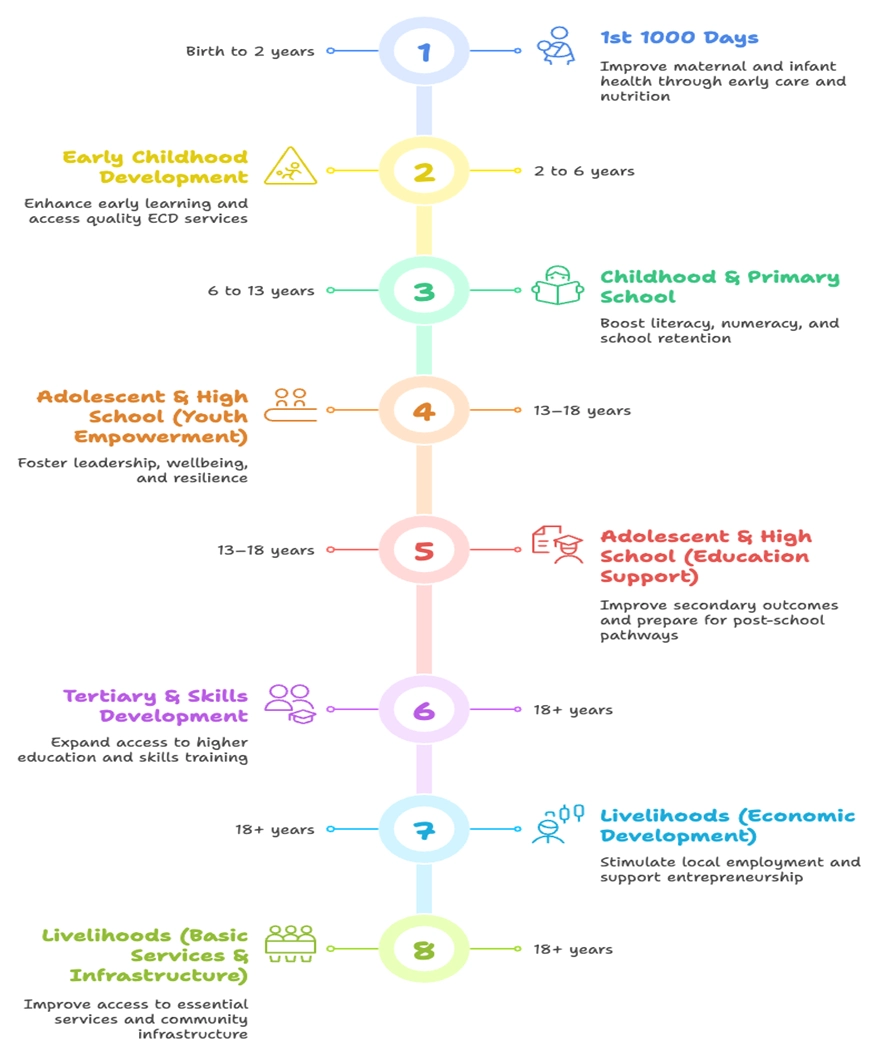
The Trust’s key focus areas are
• Youth Empowerment
• Education and Skills Development
• Health and Well-being
• Strengthening Local Social Infrastructure
• Disability as a cross-cutting theme
Meaningful projects such as a youth employment, skills development and education enhancement programmes are already being implemented.
APPLICATION FOR FUNDING
Since it’s establishment, the Trust has successfully finalised two rounds of funding applications for funding from the Trust.
The Trust, currently in its infancy stages, for administrative and expediency purposes, limited the process of applying for funding from the Trust.
Does your organisation qualify for funding?
Before filling out the application form, please check if it meets these criteria:
• Is it based within a 50km radius of the Waainek Wind Farm?
• Are at least 75% of the beneficiaries black South Africans?
• Are there a minimum of 100 beneficiaries?
• Is the project in alignment with the Makana Winds of Change Community Trust focus areas?
• Does the probability of the project succeeding exceed 50%?
• Will completion of the project result in job creation for the community?
• Is there sufficient support in place to ensure that the project is sustainable?
• Does the organisation have a functional board and audited financial statements?
The application process is run during specific periods. Trust administrators send out application forms to potential organisations. The applicant organisations need to carefully follow the application process detailed on the application forms and provide all supporting documents within the specified time period.
Through a transparent, fair and meticulous process, all applications are evaluated, according to the nature of the project and the social benefit and impact of each project, in relation to the socio-economic challenges within the communities that such project seeks to address. Following this evaluation, and with careful consideration of the community needs assessment, the Trustees, by way of resolution, approve the funding of projects that the Trustees deem most appropriate to address the urgent needs of the communities.
COMMUNITY PROJECTS AND PARTNERS
The Trust has partnered with, and/or appointed, various organisations to assist with achieving its Vision. The following are examples of some of the projects funded and implemented in the communities, enabled by the funding received by the Trust:
GADRA Educational Welfare
GADRA Education is widely recognised as the leading education-focused NGO in Grahamstown and is the city’s oldest community organisation, with a legacy spanning nearly 70 years. Over the decades, GADRA has opened the doors of quality learning to tens of thousands of young people.The organisation is dedicated to delivering key education services while actively advocating for transforming the public education system. Its primary activities include the GADRA Matric School, the Primary Education Programme, the Whistle Stop School, and the management of the Vice Chancellor’s Public-School Initiative.
The Trust is supporting QondaConnect , which tackles the comprehension crisis head-on by integrating literacy instruction into content subjects, such as Natural Science. It supports teachers with ready-made, curriculum-aligned materials and in-classroom mentoring.
Rhodes University Community Engagement (RUCE)
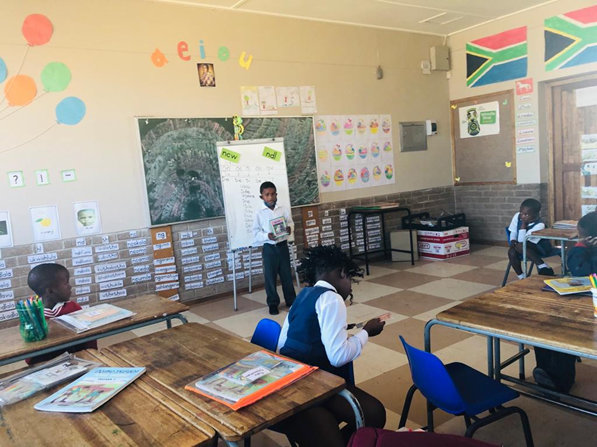
RUCE is committed to fostering mutually beneficial partnerships between the university and the broader community, with the aim of advancing social and economic development in the local context. Central to its approach is the recognition of students as key change agents; to this end, the division coordinates six structured volunteer programmes through which 972 trained student mentors are placed in 47 community-based organisations, non-profits, and schools. These programmes reach over 2,225 beneficiaries each week, contributing significantly to local social development, particularly in the field of education.
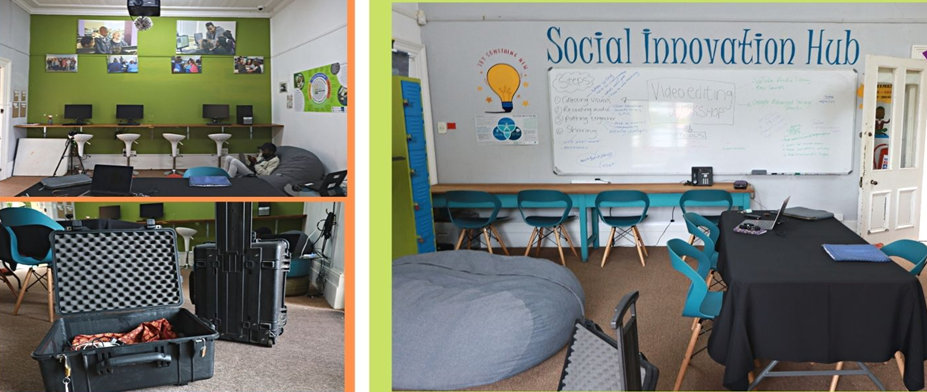
The Social Innovation Hub, a flagship RUCE initiative, serves as a convergence point for innovation, training, mentoring, and resource sharing. It supports over 40 local enterprises annually through accredited programmes in ICT, digital storytelling, and enterprise development, including branding, marketing, and equipment support.
Mfuzo Boxing Club
Mfuzo Boxing Camp is a boxing club that aims to instill physical fitness in children and sports development through engaging them in boxing and equipping them with life skills. The organisation empowers, develops, and capacitates the youth physically & mentally to be future boxing champions. Mfuzo Boxing Camp imparts boxing skills to school-going boys and girls between the ages of 14 to 18 and adults between 19 and 40. Of the beneficiaries, the organisation has 29 boys and 25 girls.
The organisation also offers academic support three (3) times a week through homework assistance by partnering with local schools for the venue and other resources. Mfuzo Boxing Camp envisions building and becoming one of the biggest, powerful, and effective boxing camps in South Africa that produces Olympic medalists, future world champions and progressive citizens.

NEEDS AND ASSET ANALYSIS
Knowledge Pele (KP) in its capacity as the trust administrator for the Makana Winds of Change Community Trust (MWOCCT) carried out a research-based community needs and asset assessment that are being used to inform the Trust’s strategy. The Trust’s obligations are derived from its legal obligation and commitment, while serving the needs, requirements and priorities of its host communities. This report therefore seeks to generate knowledge and understanding from evidence-based research derived from primary and secondary data. Primary data is considered in this exercise in order to ensure that the voices of the community members are drawn in as beneficiaries and co-developers of the greater social investment strategy.